
Care and maintenance
Dolomite and daily use: what actually happens with heat and scratches
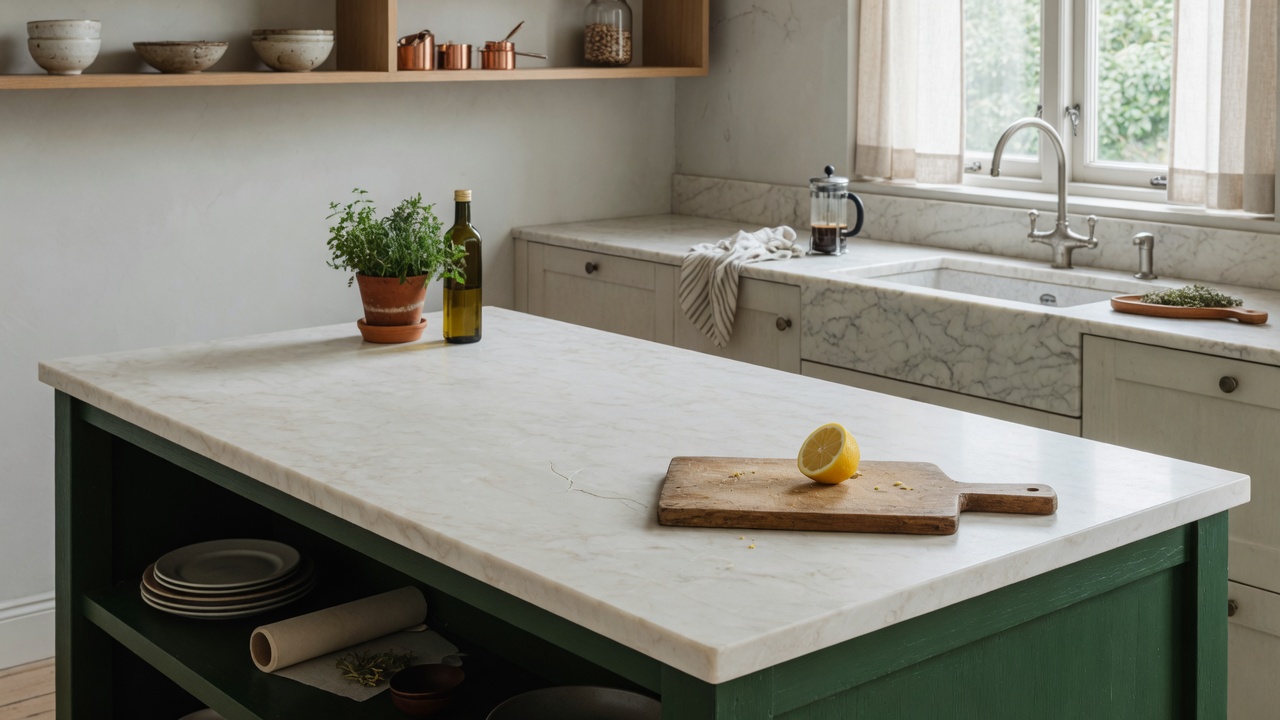
Dolomite gets sold as a tougher alternative to marble, and in some ways it is. But a lot of customers come in thinking it behaves like granite. It doesn't, not exactly. Here's what actually happens, step by step, when heat or a blade meets the surface.
What dolomite actually is
Dolomite is a carbonate rock, close cousin to limestone and marble, but with a slightly different mineral structure (it's got magnesium mixed in with the calcium carbonate). That structure makes it a bit harder than most marble on paper. In the shop we still treat it like a marble-family stone, because in real kitchens it acts like one more often than not. Some slabs sold as "dolomite" lean harder, some lean softer. We test how a slab actually behaves rather than trust the label alone.
Step one: a hot pan comes off the stove
Set a hot pan straight down and here's what's happening at the surface: a sudden burst of heat hits a small area, and calcite-family stones can react to that thermal shock with a stress mark or, over time, a dull ring. Dolomite handles brief heat better than a lot of people expect, but we won't call it heatproof, because that's not a promise anyone can back up. Use a trivet or hot pad every time. It's a two-second habit that avoids a problem you can't undo.
Step two: a knife touches the counter
Dolomite sits a little harder than classic Carrara marble, which is why fabricators like it for kitchens where marble's look is wanted but a bit more grit is needed. Still, no natural stone in this family is scratch-proof. A knife dragged straight on the surface can leave a fine mark, especially if there's grit or salt underneath the blade acting like sandpaper. Cutting boards aren't optional here. They protect your knife edge as much as they protect the stone.
Step three: something acidic spills
This is the part people skip past. Dolomite, like marble, is a calcite-based stone, and calcite reacts to acid. Lemon juice, vinegar, tomato sauce, even some wine left too long, all of it can etch the surface, meaning it leaves a dull, slightly rough spot where the polish used to be. Sealing your dolomite counter doesn't stop this. Sealing helps with staining, but it doesn't do anything against an acid reaction. That's just chemistry, not a flaw in the sealer or the install.
Step four: the spill actually stains, or doesn't
Separate issue from etching. Dolomite is porous, so it should be sealed and resealed periodically, usually about once a year in a busy kitchen, same as we'd tell you for granite or marble. A sealed surface resists a stain setting in, but if wine or oil sits overnight, it can still soak in. Wipe spills up when they happen and you'll rarely have a problem.
Step five: years down the road
This is the plain picture of dolomite over time. Expect some soft patina to develop, a few etch marks here and there if lemons and vinegar get used near the counter, and maybe a light scratch if something slides across it without a board underneath. None of that means the stone failed. It's how calcite stone family lives in a real kitchen. A lot of people end up liking that worn-in look. Others find it frustrating. Worth knowing before you commit, not after.
Where dolomite fits
If you want the marble look with a little more day-to-day grit, dolomite is a solid middle ground. For scratch and heat resistance it doesn't hold up quite like quartzite, and it's not immune to acid the way quartz is. It's its own stone with its own tradeoffs.
Come by our shop at 2015 Charleston Hwy in Cayce and look at a few dolomite slabs in person. Bring a lemon if you want, we'll show you exactly what an etch mark looks like so there's no surprise later.