
Care and maintenance
Does dolomite stain, and what to do about it
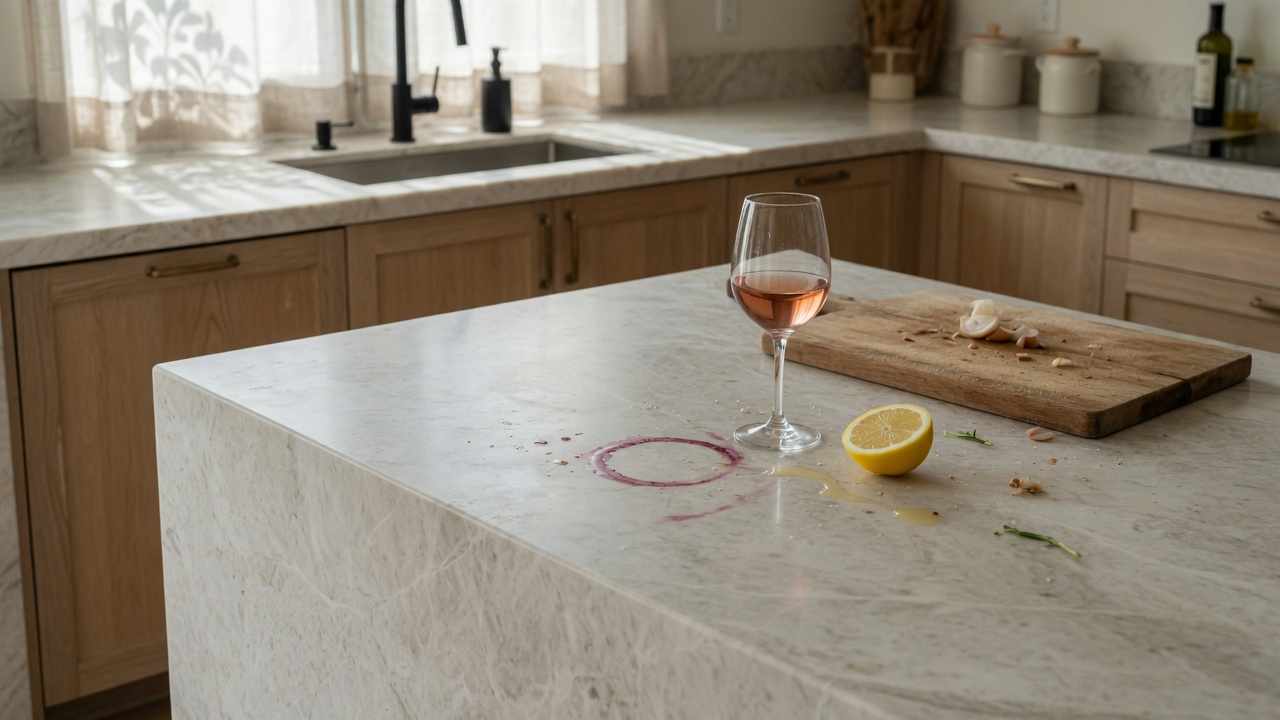
Dolomite gets picked a lot because it looks like marble but people ask if it acts tougher. It's a fair question, and it deserves a straight answer instead of a sales pitch.
Can dolomite stain?
Yes. Dolomite is a natural stone, and like granite, marble, and quartzite, it's porous to some degree. That means liquids can soak into the surface if they sit long enough. Oil, wine, coffee, and tomato sauce are the usual suspects. A sealed dolomite countertop resists staining a lot better than an unsealed one, but no sealer makes it stain-proof. If a spill sits overnight, it can still leave a mark.
Why does it stain in the first place?
Stone forms with tiny pores and mineral gaps you can't see with the naked eye. Dolomite's crystal structure is a little tighter than marble's in most cases, which is part of why people reach for it as a marble alternative, but tighter isn't the same as sealed shut. Liquid finds its way into those pores over time. Dark, oily, or acidic liquids are the ones most likely to leave a stain because they carry pigment or break down faster than water does.
Does sealing stop it completely?
No, and we won't tell you it does. Sealing fills the pores near the surface so liquid beads up instead of soaking in right away. That buys you time, usually enough to wipe up a spill before it becomes a problem. It doesn't make the stone stain-proof, and it doesn't stop etching either, which is a different issue (more on that below). We seal every job we install using a top-shelf sealer, applied by installers we train to do it right. A lot of shops hand you the bottle and call it your job. We don't. You'll still want to reseal down the road, usually about once a year for a kitchen that gets real use, but the first and most important seal is already done when we finish your install.
Is dolomite the same as marble for staining?
Close, not identical. Both are calcite-family stones (dolomite is a bit harder in most cases), and both are porous enough to stain if you let a spill sit. Where they really differ is etching. Marble and dolomite both etch from acids like lemon juice and vinegar, that dulling you see where citrus hit the surface. Some dolomite slabs resist etching a little better than classic marble, but not all of them, and it depends on the specific stone. We test slabs before we sell them so we can tell you honestly how a particular piece is likely to behave, rather than leaning on the name alone.
What should I actually do to protect it?
A few habits go a long way:
- Wipe up wine, coffee, oil, and sauce as soon as you notice them. Don't let them sit overnight.
- Use coasters under bottles and glasses, especially anything with wine or juice.
- Keep a cutting board on the counter for prep work. It protects the stone's surface and your knives.
- Reseal on a regular schedule, roughly once a year for most kitchens, sooner if you notice water isn't beading up like it used to.
- Clean with a plain pH-neutral stone cleaner instead of vinegar or citrus-based sprays, since those cause etching, not staining, but they'll still dull the surface.
What if it already stained?
Some stains lighten with a poultice made for stone, which pulls the oil or pigment back out over a day or two. It's not instant and it doesn't always get a stain out completely, especially an old one. If you're dealing with a stubborn spot, bring us a photo or stop by the shop and we'll tell you straight what your options are.
If you're weighing dolomite against granite or quartzite for a kitchen that sees a lot of cooking, come look at slabs in person at 2015 Charleston Hwy in Cayce. Seeing how a specific piece takes water and lemon juice tells you more than any spec sheet.