
Buying guides
Picking the right dolomite slab: reading color and veining
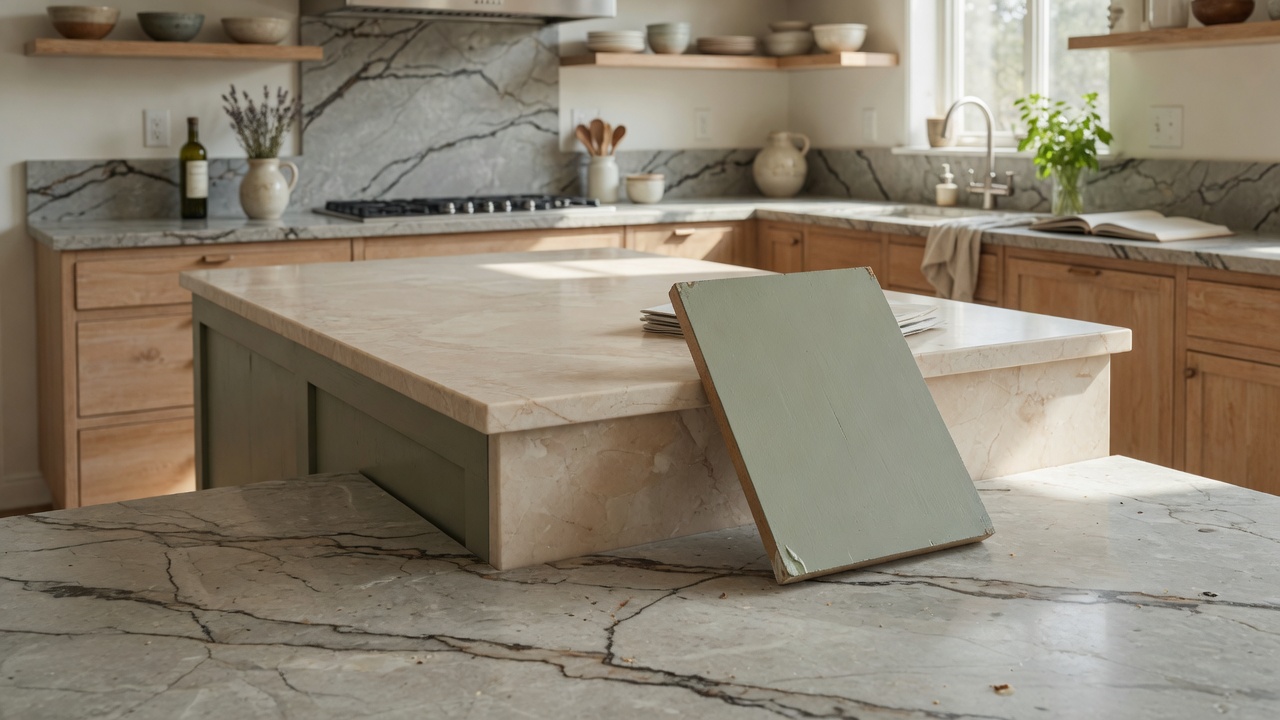
The myth: one slab of dolomite looks like the next
A lot of folks walk in thinking dolomite is dolomite, that if they liked a photo online or a small sample chip, any slab labeled the same name will match. We hear it a lot: "just order me the one in the picture."
Here's the real deal. Dolomite is a natural stone, cut from blocks pulled out of the ground at different times, sometimes different quarries entirely. Even slabs from the same block can shift in tone from one end to the other. The chip you're holding is a snapshot of one small piece of one slab. It's a starting point, not a promise.
Why slabs vary so much
Dolomite forms from mineral deposits laid down over long stretches of time, and those layers weren't uniform. That's what gives you the movement, the soft grays, warm creams, sometimes a hint of gold or brown running through it. Veining comes from mineral bands that shifted or fractured while the stone was forming. No two slabs get the same exact pattern, and that's not a flaw, it's just how natural stone works.
This is also why we tell people trade names don't guarantee much. Some slabs sold as "dolomite" behave more like a softer calcite stone and can etch more easily. We look at how a slab actually performs, not just what the yard tag calls it.
What to actually look at when you're picking a slab
- Background tone. Is it more white, more gray, or does it lean warm and creamy? This is the biggest factor in how it reads next to your cabinets.
- Vein density. Some dolomite is quiet, with faint movement. Other slabs are bold, with heavy dark veining that becomes the focal point of the kitchen. Neither is better, it depends on what you want the room to do.
- Vein color. Gray veins read cooler and calmer. Gold or rust veins warm the whole slab up and pair differently with wood tones.
- Consistency across the slab. Stand back and look at the whole thing, not just one corner. Some slabs have busy movement in one section and calmer stone elsewhere. Know which part will land on your island versus your perimeter.
See it in your own light
Showroom lighting isn't your kitchen's lighting. A slab that looks bright and neutral under fluorescent lights can turn warmer or cooler under your recessed lights or a north-facing window. If you can, bring a cabinet door sample or a paint chip with you when you come look at slabs. Holding it up against the actual stone tells you more in ten seconds than a photo ever will.
Matching it to your cabinets
As a rough rule: quieter, low-contrast dolomite lets busy cabinet grain or bold hardware stand out. Bold, high-contrast veining works best with simpler cabinet doors and a calmer palette, so the countertop doesn't have to compete for attention. If you're going with white or light cabinets, a warmer-toned dolomite can keep the kitchen from feeling too cold and clinical.
Care notes worth knowing before you buy
Dolomite is porous like other natural stone and should be sealed, then resealed every so often, usually about once a year for a kitchen that sees regular use. It handles daily wear well, but we still recommend a cutting board for chopping and a trivet under hot pans. If it's on the softer, calcite-leaning side, it can etch from lemon juice or vinegar, so wipe up acidic spills when they happen.
If you want to see what we mean about variation, come by 2015 Charleston Hwy in Cayce. Standing in front of the actual slab, in real light, is still the best way to know if it's the right one for your kitchen.