
Care and maintenance
How to care for dolomite countertops
Is dolomite tougher than marble?
That's the question we get most, and the answer is a qualified yes. Dolomite is a calcite-adjacent stone, but it's generally denser and a bit harder than true marble, so it resists scratching and etching somewhat better. That doesn't mean it's immune to either. Dolomite still contains calcium carbonate, and acids can still dull the surface. If someone tells you dolomite won't etch, they're selling you something. It etches less readily than soft marble, but it etches.
Daily cleaning
Wipe it down with warm water and a mild dish soap, or a stone-safe cleaner if you want one on hand. A soft cloth or sponge is all you need. Skip anything with vinegar, bleach, or ammonia. Those are acidic or harsh enough to dull the finish over time, and they can strip the sealer faster than normal wear would. Dry the surface after cleaning if you want to keep water spots from building up around the sink.
What actually damages it
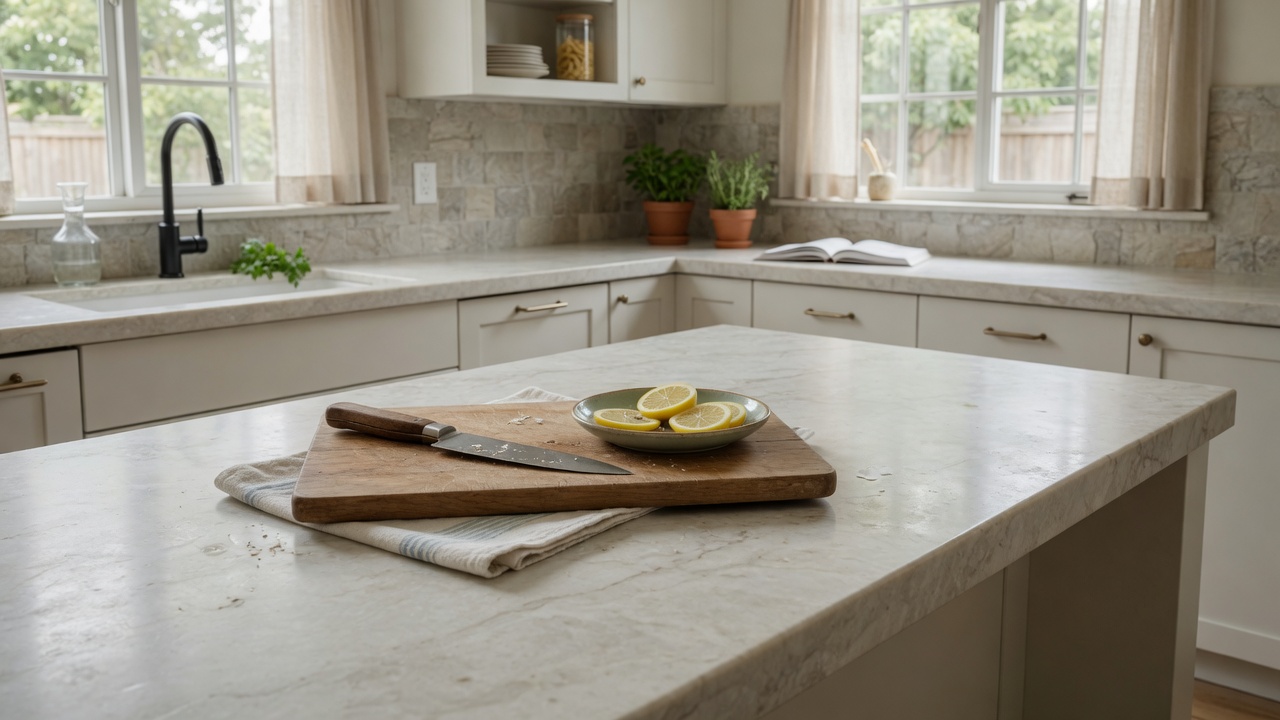
Lemon, vinegar, wine, and tomato sauce are the usual culprits behind etch marks, those dull, slightly rough spots where the acid has reacted with the stone. It's not a stain, it's a surface change, and it won't wipe off. If it happens, a light polish can sometimes help minor etching, but deep marks may need a pro. Cutting boards matter here too. Dolomite holds up well to daily kitchen use, but it's not scratch-proof, so don't chop directly on it, especially with a sharp knife pressed hard.
Heat is another spot people get wrong. Dolomite handles brief contact with a warm pan better than some materials, but we still tell every customer to use a trivet. Thermal shock from a pan straight off the stove can stress any natural stone over time, dolomite included.
Sealing, and why it's not optional
Dolomite is porous, less porous than a soft marble, but porous all the same, and it needs to be sealed. We seal every dolomite top at install with a good sealer, applied by installers we've trained to do it right. That's the seal that matters most, and it's done before you ever touch a sponge to the counter. After that, plan on resealing roughly once a year, maybe a little less often depending on how the kitchen gets used. A quick water-bead test tells you when it's time: if water soaks in instead of beading up, reseal.
Sealing buys you time against stains, wine, oil, coffee, that kind of thing, but it does nothing for etching. Those are two separate problems with two separate causes, and no sealer on the market stops an acid reaction.
How it wears in real use
Given a few years in an actual kitchen, dolomite develops a little character. Faint etching near the sink, maybe a light patina on well-used spots. Most owners don't mind it, and some like the aged look it takes on, similar to how marble ages. If you want something that stays glossy and untouched forever, dolomite isn't that stone, and honestly neither is marble.
If you're weighing dolomite against granite or quartzite for your kitchen, come by 2015 Charleston Hwy in Cayce and look at actual slabs. Seeing the veining and feeling the surface tells you more than any spec sheet.